
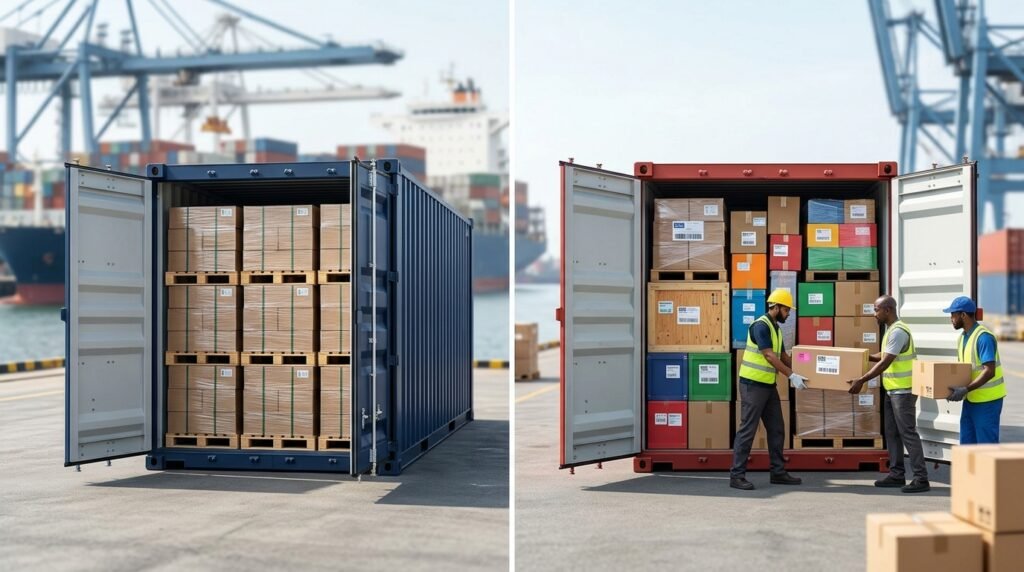
Choosing the right shipping method is an important decision for businesses involved in international trade. The choice affects shipping costs, delivery times, cargo handling, and overall supply chain efficiency. Two of the most common options in international container shipping are Full Container Load (FCL) and Less Than Container Load (LCL).
Although both methods transport goods in shipping containers, they work differently and suit different shipment sizes and business requirements. Understanding the differences between FCL shipping and LCL shipping can help importers and exporters select the most suitable option for their cargo.
In this guide, we explain how each method works, compare their main advantages and disadvantages, and discuss the factors businesses should consider before choosing between them.
What Is Full Container Load (FCL) Shipping?
Full Container Load (FCL) shipping is a transportation method in which a business books an entire shipping container for its cargo. The container is allocated to one shipment, meaning the goods are not combined with cargo belonging to other shippers.
FCL shipping is commonly used by businesses transporting large volumes of products or shipments that require dedicated container space. Standard container sizes include 20-foot and 40-foot containers, although other container types may be available depending on cargo requirements.
How Does FCL Shipping Work?
Under FCL shipping, the shipper arranges to use an entire container for their goods. The cargo is loaded into the container, secured, and transported to the destination according to the agreed shipping arrangements.
The process generally includes:
- Booking a suitable container based on cargo volume and characteristics.
- Arranging cargo collection and transportation to the loading location.
- Loading and securing the goods inside the container.
- Completing the required shipping and customs documentation.
- Transporting the container to the destination port.
- Arranging destination handling, customs clearance, and final delivery.
FCL shipping services are particularly suitable when a shipment occupies a substantial portion of a container or when a business prefers to keep its cargo separate from other shipments.
What Is Less Than Container Load (LCL) Shipping?
Less Than Container Load (LCL) shipping is a transportation method that allows businesses to ship smaller quantities of goods without booking an entire container.
Instead of using a dedicated container, the cargo is combined with shipments from other businesses. Each shipper pays for the space their goods occupy rather than the cost of the entire container.
LCL shipping is often a practical option for small and medium-sized businesses that import or export limited quantities of products. It allows them to access international container shipping without waiting until they have enough cargo to fill a complete container.
How Does LCL Shipping Work?
LCL shipments are collected and transported to a consolidation warehouse, where goods from different shippers are grouped together according to their destinations and shipping arrangements.
The process generally involves:
- Collecting individual shipments from different businesses.
- Delivering the cargo to a consolidation warehouse.
- Measuring and checking the shipments.
- Combining compatible cargo into one container.
- Transporting the consolidated container to the destination.
- Separating the shipments at the destination warehouse.
- Arranging customs procedures and final delivery for each shipment.
LCL consolidation services make it possible to transport smaller shipments efficiently by sharing container space and transportation costs among multiple businesses.
FCL vs. LCL: What Are the Main Differences?
The main difference between FCL and LCL is how container space is used. FCL provides a dedicated container for one shipment, while LCL combines multiple shipments in the same container.
However, there are several other differences worth considering.
1. Shipment Size and Cargo Volume
FCL is generally more suitable for large shipments that require a significant amount of container space. Businesses moving bulk products, machinery, industrial materials, or large quantities of goods may benefit from booking an entire container.
LCL is more appropriate for smaller shipments that do not justify the cost of a full container. It gives businesses the flexibility to transport smaller quantities without paying for unused container capacity.
2. Shipping Costs
Cost is one of the most important factors when comparing FCL shipping and LCL shipping.
With FCL, businesses generally pay for the use of the entire container, regardless of whether it is completely full. This can make FCL more economical when cargo volume is high enough to justify the container cost.
With LCL, shipping costs are generally calculated according to the shipment’s chargeable volume or weight, subject to the freight provider’s pricing rules and minimum charges. This means businesses only pay for the space their cargo occupies, although additional consolidation and handling charges may apply.
The most economical option depends on shipment dimensions, weight, route, destination charges, and the overall quotation.
3. Transit Time
FCL shipments may involve fewer handling stages because the container is allocated to one shipment. Once loaded and ready, it can proceed through the planned transportation process.
LCL shipments require additional steps, including consolidation before departure and deconsolidation after arrival. These operations can increase the overall transit time.
However, actual delivery times depend on the shipping route, vessel schedules, port congestion, customs procedures, and the logistics arrangements involved.
4. Cargo Handling and Security
FCL shipments are generally handled as a dedicated container. This can reduce the need to handle individual packages alongside other customers’ cargo during consolidation and separation.
LCL shipments are handled together with goods belonging to other shippers. As a result, they may go through additional loading, unloading, and warehouse handling stages.
For fragile, sensitive, or high-value goods, businesses should consider packaging requirements and discuss suitable handling arrangements before selecting a shipping method.
5. Flexibility and Shipment Frequency
LCL offers flexibility for businesses that need to send smaller shipments regularly. Companies do not have to wait until they have enough products to fill an entire container.
FCL may be more suitable for businesses with larger, planned shipments or regular cargo volumes that justify booking dedicated containers.
When Should You Choose FCL Shipping?
FCL may be the better option when:
- Your shipment occupies a large proportion of a container.
- You transport bulk goods or large quantities of products.
- Your cargo requires dedicated container space.
- You want to reduce the number of consolidation and deconsolidation stages.
- The total FCL quotation is more economical than shipping the same volume through LCL.
FCL is commonly considered by manufacturers, distributors, wholesalers, and businesses handling regular international shipments.
When Should You Choose LCL Shipping?
LCL may be the right choice when:
- Your shipment is too small to justify a full container.
- You need to transport smaller quantities of products.
- You want to avoid paying for unused container space.
- You are testing a new market or shipping products for the first time.
- Your business needs flexible shipping arrangements.
Working with an experienced LCL freight forwarder can help businesses coordinate consolidation, documentation, cargo handling, and transportation arrangements.
How to Choose the Right Shipping Method
Before deciding between FCL and LCL, businesses should evaluate several factors:
Cargo volume and weight: Compare the shipment’s dimensions and weight with the available container capacity and LCL pricing structure.
Total shipping cost: Consider more than the basic freight rate. Include origin charges, destination handling, documentation, customs-related costs, and final delivery.
Delivery requirements: Check the expected transit time and whether consolidation or additional handling could affect your delivery schedule.
Cargo characteristics: Consider the nature of the goods, packaging requirements, and whether dedicated container space is preferable.
Shipping frequency: Regular large shipments may make FCL more practical, while smaller and less frequent shipments may benefit from LCL.
Comparing complete quotations for both options is often the best way to identify the most suitable solution.
How NICOMART Supports International Container Shipping
At NICOMART, we understand that every business has different shipping requirements. Whether you need FCL shipping services for a large commercial shipment or LCL consolidation services for smaller quantities, choosing the right logistics arrangements is essential.
We coordinate with relevant suppliers and logistics partners to support international sourcing, freight arrangements, import and export operations, and cargo movement. Our approach focuses on understanding your shipment requirements and helping you identify suitable transportation options based on cargo volume, destination, timing, and budget.
From comparing shipping solutions to coordinating the necessary logistics arrangements, NICOMART helps businesses approach international trade with greater clarity and confidence.
Final Thoughts
Both FCL and LCL offer practical solutions for international container shipping, but the right choice depends on your shipment size, budget, delivery schedule, and cargo requirements.
FCL provides dedicated container space and is generally suitable for larger shipments. LCL allows businesses to share container space and transport smaller quantities without booking an entire container.
By comparing the total costs, handling requirements, and expected transit times, businesses can make better shipping decisions and manage their international supply chains more effectively.
