
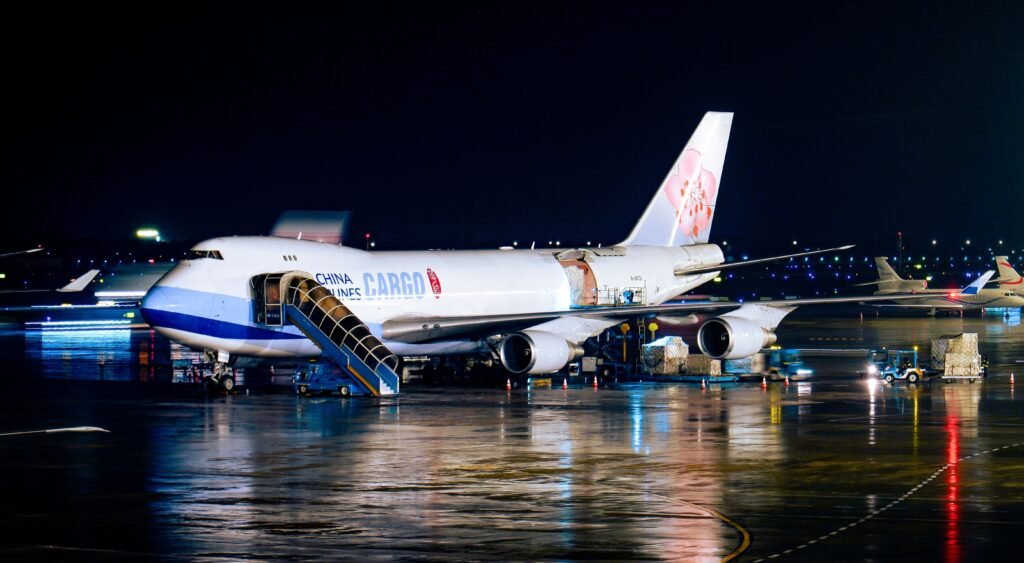
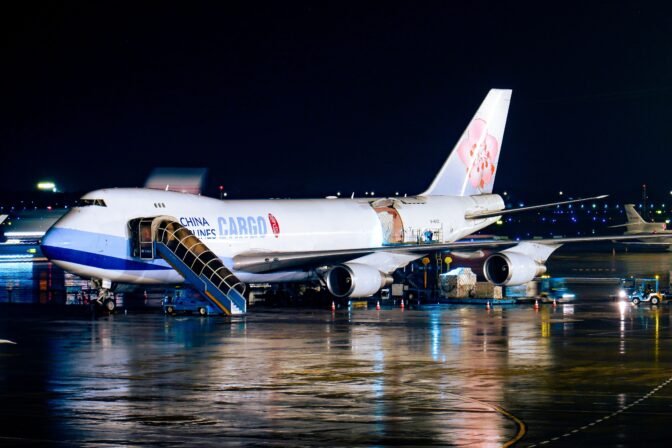
Persistent geopolitical disruption, unstable ocean schedules and higher transport costs are changing how companies evaluate heavy industrial cargo. As logistics enters Q4 2026, heavyweight air freight is becoming relevant to shipments that would traditionally have moved by sea.
For decades, the transport equation was simple. Heavy machinery, industrial equipment and large components moved by ocean because sea freight offered the capacity and cost structure required for heavy loads. Air freight was mainly reserved for urgent, high-value cargo. That distinction still exists, but in 2026 it has become less absolute.
Ocean Volatility Is Changing the Economics
The container shipping market remains exposed to geopolitical risk, port congestion and unstable schedules. Sea-Intelligence reported that global container schedule reliability fell to 56.4% in July 2026, while average delays for late vessels rose to 6.06 days. Congestion was one of the main causes.
At the same time, the return of container services to the Red Sea and Suez Canal remains partial. Sea-Intelligence estimated in September that Red Sea routing was only around 27% normalized. The Strait of Hormuz crisis has also shown how quickly regional conflict can affect freight pricing and network capacity. Xeneta reported sharp increases as disruption affected routing, vessel deployment and available capacity.
The key point is not that ocean freight has become universally expensive. The more important change is that, on some routes, it has become harder to predict. And predictability has economic value.
Why Heavy Cargo Is Entering the Air Freight Conversation
Heavyweight air cargo is not new. Aircraft engines, oil and gas equipment, industrial spare parts and specialized machinery have moved by air for decades. What is changing is the number of situations in which companies are willing to consider it.
A component weighing one or several tonnes would traditionally be an obvious candidate for sea freight. If delivery time was flexible, the large cost difference between sea and air usually ended the discussion. But that comparison changes when a shipment is linked to a production line or industrial project.
A replacement pump may be only one item inside a large factory. A specialized tool may represent a small percentage of the value of a production line. A machinery component may be inexpensive compared with the project that cannot be commissioned until it arrives.
In these cases, the real comparison is no longer simply air freight versus ocean freight. It becomes the cost of air transport versus the cost of waiting.
Freight Cost vs. Cost of Delay
For critical industrial cargo, transport cost is only one part of the economic equation. The real cost of an ocean shipment may also include inventory, schedule uncertainty, production downtime, missed installation windows, contractual penalties and delayed revenue.
The comparison therefore becomes broader:
Ocean freight cost + inventory exposure + delay risk + operational downtime
versus
Air freight cost + faster and more predictable recovery time
Air freight is still more expensive in most cases. But that does not automatically make it the more expensive business decision. If a factory loses more money each day from a stopped production line than the cost required to move a critical component by air, choosing air freight can be economically rational. This is one reason heavyweight air cargo is becoming strategically relevant during periods of maritime instability.
Dedicated Freighters Matter More
The wider air cargo market is also showing stronger demand for specialist capacity. IATA reported that global air cargo demand increased 3.9% year-on-year in July 2026, while available capacity grew only 1.7%. It also noted that dedicated freighters gained market share while belly-hold traffic declined, potentially reflecting stronger demand for larger or specialized cargo. This matters because heavyweight industrial freight often requires capabilities that passenger-aircraft belly capacity cannot provide.
Main-deck freighters can accommodate larger pieces, different loading configurations and higher floor-loading requirements. But weight alone does not determine whether a shipment can fly. Exact dimensions, aircraft door size, piece weight, floor loading, center of gravity, packaging, lifting points and ground-handling equipment can all determine whether a shipment is feasible. A relatively light but oversized machine may be more difficult to move than a much heavier compact unit. That is why heavyweight air cargo often becomes an engineering exercise rather than a standard freight booking.
Q4 Brings Its Own Air Cargo Pressure
The growing relevance of heavy air freight does not mean air capacity is cheap or unlimited. Air cargo is also facing cost and capacity pressure. IATA reported that jet fuel prices in July were higher than a year earlier, while Xeneta said Middle East disruption had removed significant global air cargo capacity earlier in 2026. As Q4 approaches, peak-season demand adds pressure.
Heavyweight shipments face an additional constraint: not every available flight can physically accommodate them. A market may have air cargo capacity overall while still having limited suitable main-deck space for a particular industrial shipment. This makes early planning, aircraft compatibility and specialist handling important.
Air Freight Is Not Replacing Ocean Freight
The current environment does not suggest that heavy machinery is moving from ships to aircraft on a large scale. Ocean freight remains fundamental to global industrial trade and will continue to be the primary mode for most heavy equipment, project cargo and non-urgent machinery. The real change is more selective. Cargo that was once automatically classified as “sea freight” is increasingly being evaluated before the decision is made.
Some companies may move the main project by ocean while flying critical components needed for installation or commissioning. Others may use air freight when maritime disruption threatens production schedules or contractual deadlines. This is not a replacement of one transport mode by another. It is a more flexible response to uncertainty. As Q4 2026 approaches, reliability itself is becoming part of the transportation product.
For some industrial supply chains, the key question is no longer only:
How cheaply can this move by sea?
It is increasingly: