
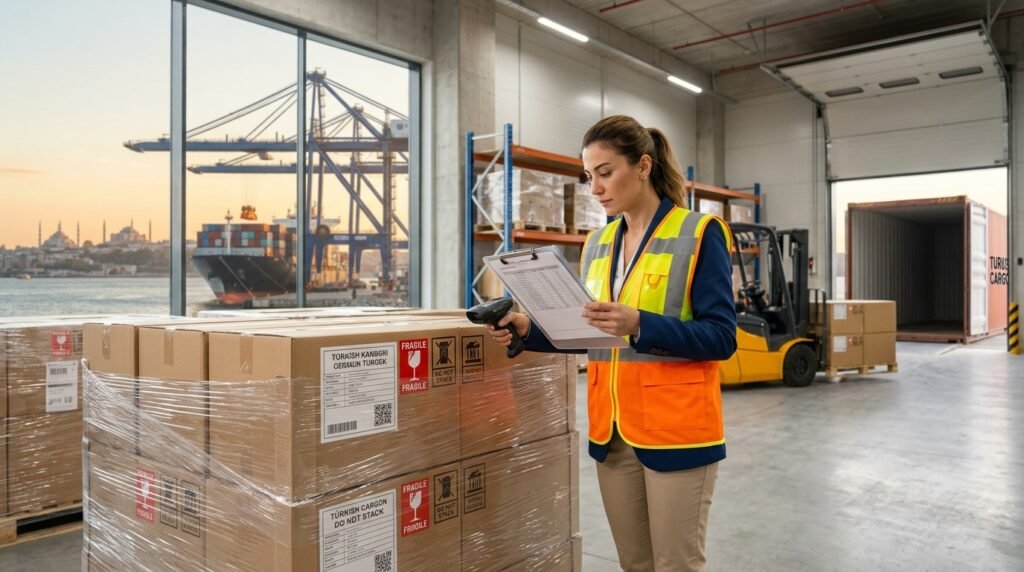
Preparing cargo properly before shipment is an essential part of international trade. Whether a business is exporting raw materials, machinery, furniture, textiles, or finished products, the way goods are packed, protected, labeled, and organized can directly affect their safety and delivery process.
Poor preparation can lead to damaged products, additional handling costs, customs delays, and unnecessary complications during transportation. On the other hand, well-prepared cargo is easier to handle, store, load, and deliver.
From selecting suitable packaging to arranging palletizing services and preparing shipping documents, businesses should follow a clear process before their goods leave the warehouse. This guide explains the main steps involved in preparing cargo for international shipment.
1. Understand Your Cargo Requirements
The first step is to understand the characteristics of the products being shipped. Different types of cargo require different preparation methods depending on their size, weight, shape, material, and sensitivity.
For example, fragile products may need protective cushioning, while heavy industrial equipment requires strong support and secure fastening. Products sensitive to moisture may need waterproof packaging or protective wrapping.
Before choosing packaging materials, consider:
- Product dimensions and total weight.
- Fragility and sensitivity to pressure or movement.
- Exposure to moisture, dust, and temperature changes.
- Storage and transportation conditions.
- Special handling or safety requirements.
Understanding these details helps businesses choose appropriate cargo packing services and reduce the risk of damage throughout the shipping process.
2. Choose the Right Export Packaging
Export packaging is designed to protect products during international transportation, which may involve several handling stages and different transportation methods.
Unlike ordinary retail packaging, export packaging must account for longer journeys, warehouse storage, loading and unloading, and possible changes in environmental conditions.
Depending on the cargo, suitable packaging may include:
- Strong corrugated cardboard boxes.
- Wooden crates and protective cases.
- Industrial wrapping and stretch film.
- Foam, cushioning, and protective inserts.
- Waterproof or moisture-resistant materials.
- Strapping and reinforced packaging.
The packaging should be strong enough to protect the products without creating unnecessary weight or taking up excessive space.
Businesses exporting goods internationally should also check whether wooden packaging materials need to comply with applicable phytosanitary requirements, such as ISPM 15. Requirements should be confirmed for the destination country and shipment.
3. Use Palletizing Services for Safer Handling
Palletizing is the process of arranging goods on pallets so they can be moved and handled more efficiently using forklifts and other material-handling equipment.
Palletizing services can be particularly useful for businesses shipping multiple boxes, heavy products, or goods that need organized warehouse handling.
A properly prepared pallet should:
- Distribute weight evenly.
- Keep heavier items at the bottom.
- Avoid excessive overhang beyond the pallet edges.
- Use suitable wrapping and strapping.
- Keep the load stable during movement.
- Allow safe access for handling equipment.
The pallet itself should be suitable for the cargo’s weight and dimensions. If wooden pallets are used for international shipments, applicable destination requirements should be checked.
Correct palletizing helps improve cargo stability, simplify loading and unloading, and reduce the likelihood of products shifting during transportation.
4. Consider Cargo Consolidation
Cargo consolidation involves combining multiple shipments into one larger shipment or transport unit. It can be useful for businesses that need to transport smaller quantities of goods without booking an entire container.
For example, shipments from different suppliers may be collected, organized, and consolidated before being transported to the same destination.
Before cargo consolidation, businesses should confirm:
- Each shipment has clear identification.
- Product descriptions and quantities are accurate.
- Packaging is suitable for combined handling.
- Goods are compatible for transportation and storage.
- Shipping documents are prepared correctly.
- Delivery deadlines are coordinated.
Cargo consolidation can help optimize available transport space, but it requires careful planning. Poorly organized shipments can create confusion during loading, unloading, or customs procedures.
5. Label and Identify Every Shipment
Clear labeling helps suppliers, warehouse teams, carriers, and customs professionals identify and handle cargo correctly.
Each package should carry the necessary information according to the product, shipping arrangement, and destination requirements.
Common shipping label details include:
- Consignee and shipper information.
- Destination and shipment reference.
- Package number and total package count.
- Gross and net weight, where required.
- Handling instructions.
- Product identification or reference codes.
Depending on the goods, labels may also need handling symbols such as fragile, keep dry, or this side up.
Make sure that labels are readable, securely attached, and consistent with the shipping documents. Incorrect or missing information can cause delays and handling errors.
6. Prepare Shipping Documents Before Dispatch
Cargo preparation is not limited to physical packaging. Accurate documentation is equally important for international shipments.
Depending on the shipment and destination, businesses may need:
- Commercial invoice.
- Packing list.
- Bill of lading or air waybill.
- Certificate of origin, where required.
- Export declaration.
- Product-specific certificates or permits.
The documents should match the actual cargo, including product descriptions, quantities, weights, and package details.
Businesses should confirm destination-specific documentation requirements with the relevant customs authorities or qualified professionals before dispatch. Missing or inconsistent information may lead to additional checks and delays.
7. Complete a Final Pre-Shipment Inspection
Before cargo leaves the warehouse, conduct a final check to confirm that everything is ready.
Review the following:
- Products match the purchase order.
- Quantities and packaging are correct.
- Cargo is protected against expected transportation conditions.
- Pallets and packages are stable.
- Labels are clear and accurate.
- Shipping documents are complete.
- Collection and loading arrangements are confirmed.
For high-value, fragile, or specialized products, an independent pre-shipment inspection may also be appropriate.
How NICOMART Supports Export Cargo Preparation
At NICOMART, we understand that effective cargo preparation is an important part of reliable international logistics. Businesses need more than transportation; they also need clear coordination between suppliers, warehouses, freight providers, and other relevant service partners.
We help coordinate export cargo preparation requirements, packaging arrangements, palletizing, cargo consolidation, and international freight operations through relevant service providers. Our approach is based on understanding the product, destination, shipment size, and delivery requirements before transportation begins.
Final Thoughts
Preparing cargo before shipment helps protect products, improve handling efficiency, and reduce avoidable transportation problems. By selecting suitable export packaging, arranging proper palletizing, organizing cargo consolidation, checking labels, and preparing accurate documents, businesses can make their shipments more organized and reliable.
A careful pre-shipment process is an important investment in protecting goods and supporting a smoother international supply chain.