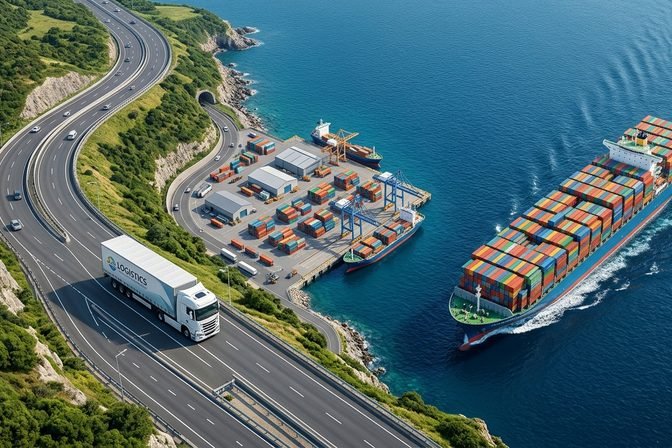
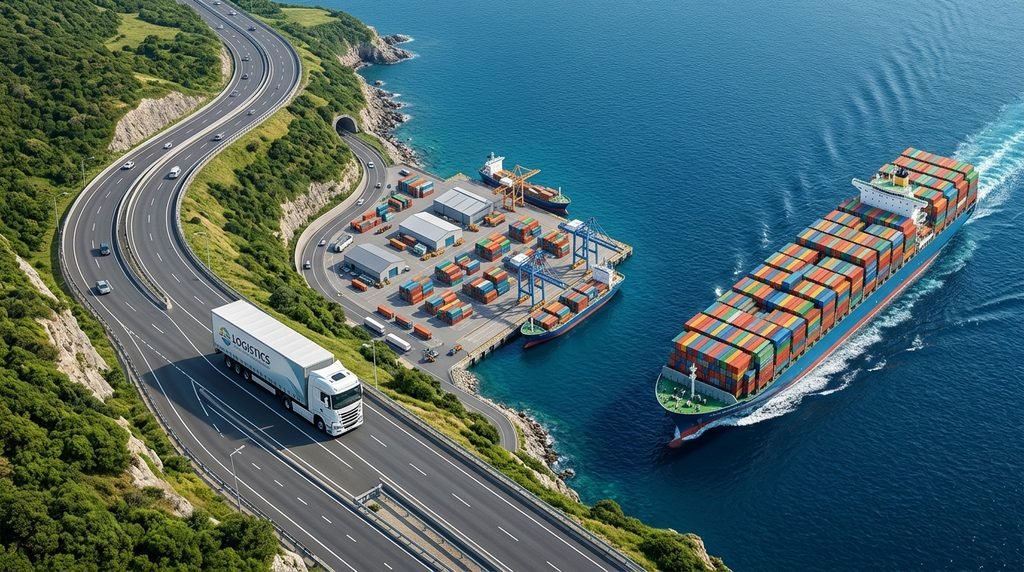
Choosing the right transportation method is an important decision for any business involved in domestic or international trade. The shipping method you select can affect delivery times, transportation costs, cargo capacity, and the overall efficiency of your supply chain.
Two widely used options are road freight and sea freight. Both play an essential role in moving goods between suppliers, manufacturers, warehouses, and customers. However, they serve different shipping needs. Road transportation offers flexibility and direct access to many destinations, while sea transportation is often a practical choice for large-volume and heavy international shipments.
So, which option is right for your business? The answer depends on your cargo, destination, budget, delivery schedule, and operational requirements.
In this guide, we compare road freight and sea freight to help businesses understand their differences and choose the most suitable transportation solution.
1. What Is Road Freight?
Road freight is the transportation of goods using trucks and other road vehicles. It is commonly used for domestic deliveries, regional distribution, and international shipments between countries connected by road networks.
Businesses use road freight services to transport different types of cargo, including industrial materials, commercial products, agricultural goods, packaged items, and palletized shipments.
One of the main advantages of road transportation is its flexibility. Trucks can collect cargo directly from a supplier’s facility and deliver it to a warehouse, distribution center, or customer’s location. This can reduce the need for additional transfers between transport modes.
Road freight can also be arranged in different ways depending on the shipment size:
- Full Truckload (FTL): The shipment occupies the full truck or is booked for the exclusive use of the vehicle.
- Less Than Truckload (LTL): Cargo shares truck space with shipments belonging to other businesses.
- Specialized transport: Certain goods require specific vehicles, equipment, or handling arrangements.
For businesses shipping goods across neighboring countries, international road freight can provide a practical connection between production facilities and destination markets.
2. What Is Sea Freight?
Sea freight is the transportation of goods by cargo ships between seaports. It is one of the most widely used methods for international trade, particularly when businesses need to move large quantities of goods over long distances.
Sea freight services are suitable for a broad range of cargo, including raw materials, industrial products, machinery, furniture, agricultural commodities, and packaged commercial goods.
Shipments are generally arranged using one of two main container options:
- Full Container Load (FCL): A business books an entire container for its shipment.
- Less Than Container Load (LCL): A business shares container space with cargo from other shippers.
A sea freight forwarder can help coordinate the shipping process by arranging transportation with carriers, coordinating documentation, and communicating with relevant service providers.
For businesses importing or exporting substantial cargo volumes, sea freight can offer an economical transportation option, although the overall cost depends on the route, container availability, handling requirements, and additional charges.
3. Road Freight vs. Sea Freight: Key Differences
Understanding the main differences between these transportation methods makes it easier to select the right solution.
Delivery Time
Road freight is often faster than sea freight over shorter regional routes, especially when the shipment can travel directly between nearby countries. It can also offer more control over collection and delivery schedules.
Sea freight usually requires more transit time because vessels travel between ports according to scheduled services. Port operations, vessel schedules, transshipment, and customs procedures can also affect the delivery timeline.
However, actual delivery times depend on the route, border procedures, carrier schedules, and seasonal conditions. Businesses should request route-specific transit estimates before making a decision.
Transportation Costs
Road freight costs depend on factors such as distance, fuel prices, vehicle type, cargo weight, shipment volume, tolls, and border-related expenses.
Sea freight is often cost-effective for large and heavy shipments transported over long distances. However, businesses must consider more than the ocean freight rate. Origin handling, port charges, destination handling, customs-related expenses, and inland delivery can all contribute to the final cost.
The cheapest option is not necessarily the most economical overall. Businesses should compare the complete transportation cost, including additional services and delivery requirements.
Cargo Capacity
Sea freight is particularly suitable for large-volume shipments and heavy cargo. Containers allow businesses to transport substantial quantities of goods in a single shipment.
Road freight capacity is generally more limited by vehicle dimensions, weight restrictions, and road regulations. Nevertheless, it offers practical solutions for smaller and medium-sized shipments, regional distribution, and deliveries that require direct access to inland locations.
Flexibility and Accessibility
Road freight offers extensive access to locations connected by road networks. Trucks can often collect and deliver cargo directly to business premises, warehouses, and distribution centers.
Sea freight depends on port infrastructure. Goods transported by sea usually need additional road or rail transportation to reach their final destination unless the delivery location is close to the port.
Environmental Considerations
The environmental impact of transportation depends on the type of vehicle or vessel, fuel, distance, cargo capacity, and how efficiently the shipment uses available space.
Sea freight can have lower emissions per tonne-kilometer than road freight for many types of cargo, particularly when transporting large volumes. However, businesses should assess the specific route and transportation arrangement rather than assume that one method is always more sustainable.
4. When Should Your Business Choose Road Freight?
Road transportation may be the better option when your business requires flexibility, regional connectivity, or direct delivery.
Consider road freight when:
- You are shipping between neighboring countries: Road networks can provide direct connections between nearby markets.
- Your shipment needs door-to-door delivery: Trucks can collect cargo from a supplier and deliver it to the final destination.
- You need flexible scheduling: Road transportation may offer more adaptable collection and delivery arrangements, depending on vehicle availability.
- Your cargo volume does not require a full shipping container: FTL and LTL options can accommodate different shipment sizes.
- Your delivery route is accessible by road: Road freight can reach many inland destinations without requiring a nearby seaport.
A trucking freight company can help arrange vehicle availability, route planning, and transportation coordination according to the shipment’s requirements.
For international deliveries, businesses should also consider border-crossing procedures, transit permits where applicable, customs documentation, and restrictions on certain cargo types.
5. When Is Sea Freight the Better Choice?
Sea freight may be more suitable when your business moves large quantities of goods over international distances and has enough time to plan the shipment.
Consider sea freight when:
- You are importing or exporting large volumes: Containers can accommodate substantial quantities of commercial cargo.
- Your shipment is heavy or bulky: Sea transportation can be suitable for machinery, raw materials, and industrial products.
- You want to manage transportation costs for large shipments: Sea freight can be economical depending on the route, cargo volume, and total shipping charges.
- Your destination is connected to major seaports: Access to established port services can make international transportation more practical.
- Your delivery schedule allows longer transit times: Sea freight is often suitable for planned inventory replenishment and regular commercial shipments.
A reliable sea freight company can help businesses coordinate container arrangements, carrier schedules, port handling, and shipping documentation.
6. What Is the Role of a Freight Forwarder?
Choosing between road and sea transportation is only one part of the shipping process. Businesses may also need assistance coordinating carriers, suppliers, documentation, customs-related procedures, and final delivery.
A freight forwarder helps organize the movement of goods by coordinating with transportation providers and other relevant parties. Depending on the shipment, the service may involve:
- Reviewing cargo details and transportation requirements
- Comparing suitable shipping methods and available routes
- Coordinating with road carriers or shipping lines
- Arranging cargo collection and delivery
- Coordinating shipping documents
- Communicating with customs professionals and relevant authorities
- Monitoring shipment progress and coordinating updates
An experienced international freight forwarding company can help businesses evaluate different transportation options and organize shipments according to their commercial requirements.
The freight forwarder’s exact responsibilities depend on the agreed service scope and shipping arrangement.
7. Can Businesses Combine Road and Sea Freight?
Yes. Many international shipments use more than one transportation method. This is commonly known as multimodal or combined transportation.
For example, a business may arrange road transportation to move goods from a factory to a seaport. The cargo then travels by sea to the destination country, where another truck collects it for final delivery.
Combining road and sea freight can provide several advantages:
- Access to international markets beyond direct road connections
- Flexible collection and final delivery arrangements
- Efficient transportation of large international shipments
- Better coordination between ports, warehouses, and inland destinations
However, combining transportation methods requires careful planning. Businesses should coordinate schedules, loading and unloading arrangements, documentation, and responsibility for each stage of the journey.
8. Factors to Consider Before Choosing a Shipping Method
Before selecting road or sea freight, review the following factors:
- Destination: Is the shipment moving to a neighboring country or a distant international market?
- Cargo characteristics: Consider weight, dimensions, product type, packaging, and handling requirements.
- Delivery deadline: Determine whether the shipment is urgent or can follow a longer transportation schedule.
- Total cost: Compare freight charges, handling, customs-related expenses, insurance, and final delivery.
- Shipment size: Decide whether your cargo is better suited to FTL, LTL, FCL, or LCL arrangements.
- Infrastructure and regulations: Check road access, port availability, border requirements, and destination-country regulations.
A clear assessment of these factors can help businesses avoid unnecessary expenses and choose a transportation method that supports their supply chain.
9. How NICOMART Supports International Shipping
Organizing international shipments involves more than selecting a truck or booking container space. Businesses may need to coordinate suppliers, transportation providers, shipping documents, and delivery arrangements across different countries.
NICOMART supports businesses through international trade and logistics coordination. Its role includes helping organize sourcing, import and export arrangements, and transportation solutions by coordinating with relevant suppliers and logistics providers.
Whether your business needs road freight services for regional deliveries or sea freight services for larger international shipments, understanding your cargo requirements is an important first step.
NICOMART helps businesses review their shipping needs and coordinate suitable logistics arrangements based on the shipment, destination, and commercial requirements.
Conclusion: Road Freight or Sea Freight?
There is no single transportation method that is best for every business. Road freight offers flexibility, regional connectivity, and convenient access to inland destinations. Sea freight is often suitable for large-volume international shipments and businesses that can plan around longer transit times.
The right choice depends on your cargo, route, budget, delivery schedule, and overall supply chain requirements. In some cases, combining both methods can provide a practical solution.
By comparing complete costs, understanding transportation requirements, and working with a reliable logistics partner, businesses can make more informed shipping decisions.
Planning your next international shipment? Contact NICOMART to discuss your cargo requirements and explore suitable logistics coordination solutions.